Historia Arts Gallery | Buy & Invest in Original Fine Art

Prudencio Lamarroza
Artists

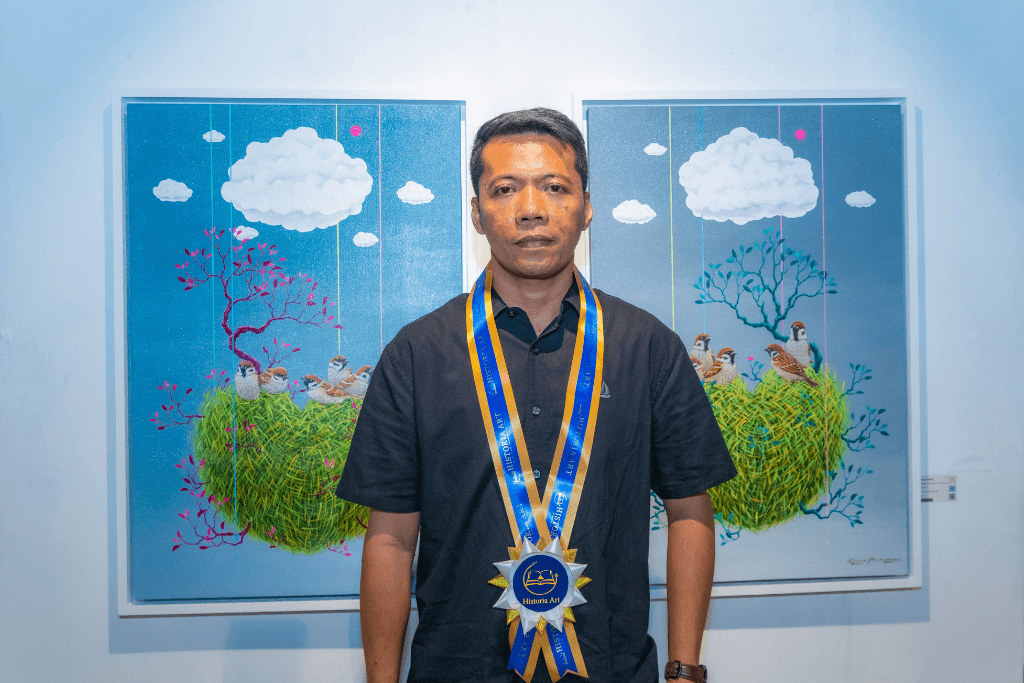
Prudencio Lamarroza

Prudencio Lamarroza, born on July 24, 1946, in Ambalayat, a barrio of Tagudin in Ilocos Sur, was the youngest of five children of Eugenio Lamarroza, a rice miller, and Eladia Leal. Known as “Amor,” he grew up surrounded by the rich landscapes of northern Luzon. The Chico and Amburayan Rivers greatly influenced his early life and shaped his deep sensitivity to nature, which later defined his artistic vision. Formal training in fine arts began at the University of Santo Tomas and continued at the Philippine Women’s University, where he earned recognition as the Most Outstanding Art Student. Early in his career, international recognition came through the ITT First Worldwide Award in New York. Participation in major exhibitions followed, including the ITT International Exhibition in Miami and the Tokyo Biennial. Key Life Events & Historical Context Lamarroza built his career during a dynamic period in Philippine art in the late 20th century. Recognition from the Ilocos Sur provincial government came in 1978 through the Sadiri ti Tagudin award. Additional recognition followed in 1983 when the City of Manila granted him the Patnubay Kalinangan Award, further strengthening his reputation. Through cultural initiatives such as the RP-US Development Council of Art, his work reached international audiences. Major exhibitions took place in Washington D.C., Seattle, Chicago, Los Angeles, and Honolulu. Beyond the United States, his works appeared in Hong Kong, Kuala Lumpur, Jakarta, and Iraq. Expansion into Europe followed with exhibitions in Chelsea, England, reflecting a growing global presence. Artistic Career Strong momentum marked Lamarroza’s career in the early 2000s. Sikat Books recognized his influence in 2000 by naming him one of the “Thirteen Painters for the 21st Century.” A year later, Landscape in Memory debuted as a solo exhibition at the Metropolitan Gallery. This collection captured rural life through muted tones and introspective compositions. By 2002, a new direction emerged through pattern-based works presented at Gallery Nine in SM Megamall. This phase highlighted his shift toward rhythmic abstraction and reinforced his position in contemporary art. Exhibitions & Representation Major institutions such as the National Museum and Ayala Museum showcased Lamarroza’s works, along with leading commercial galleries in Manila. International exposure continued through participation in the Iraq Arts Festival and exhibitions in Chelsea, England. More recently, the 2025 group exhibition Pamana at Mall of Asia Square brought together key figures in Philippine art. His inclusion in this exhibition reaffirmed his continued relevance and visibility. Awards & Accolades Notable achievements include the Sadiri ti Tagudin (1978), the Patnubay Kalinangan Award (1983), and the ITT First Worldwide Award. Recognition in 2000 as one of the “Thirteen Painters for the 21st Century” further confirmed his importance in modern Philippine art. Prudencio Lamarroza Record Prices The highest recorded price in 2025 was achieved by Untitled.A year earlier, Ecology in Peach reached a record value in 2024.Another peak occurred in 2023 with Untitled.In 2022, Diwata of the Blue Mountain set a strong record.The 2021 record came from Remnants From the Sky.During 2020, Takipsilim achieved a notable price.In 2019, Floating Naiad reached a peak value.The 2018 record was also held by Untitled.Back in 2017, Untitled / Population Series achieved a significant price.In 2015, Green Heart reached a strong market value.Earlier, in 2014, Untitled recorded a notable price.    

DOMINIC RUBIO 1
Artists

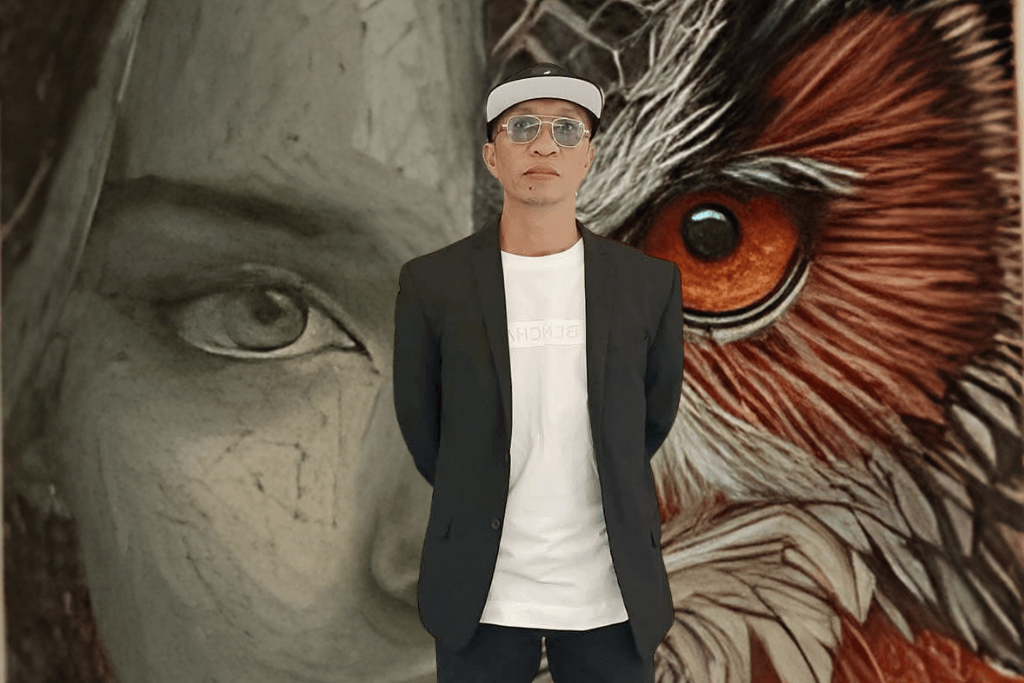
Dominic Rubio

Dominic Rubio is a Filipino visual artist and a founding member of the Guevarra and Blumentritt Group. He was born in Paete, Laguna, a town known for its woodcarving tradition. He studied at the University of Santo Tomas College of Fine Arts, where he majored in commercial arts. As a result, he developed a strong foundation in both traditional and modern techniques. Early in his career, he worked briefly as an artist at Puris Lintas, a major advertising agency in Manila. However, he later moved to Pearl Farm in Davao del Sur, where he worked as a part-time in-house artist. During this period, he traveled across the Caraga Region in Northern Mindanao. There, he learned about the Mandaya and T’boli tribes. In addition, he lived with the B’laan and Badjao communities in southern Mindanao, which further enriched his cultural perspective. Early Exhibitions and Themes Rubio first exhibited his works in Ad Infinitum. In this exhibition, he explored themes of women, motherhood, and daily life. Moreover, his paintings portrayed ethnic Filipinas engaged in everyday activities within natural landscapes. In 2003, he held a major exhibition at Galerie Joaquin. This show focused on Filipino women and their evolving identity. Furthermore, it featured both earlier works and updated portraits with more refined and glamorous elements. Because of this, his artistic direction became more defined. Artistic Style and Recognition Over time, Rubio became a favorite among collectors in Asia, the United States, and Canada. His works often feature figures in turn-of-the-century attire with elongated necks. As a result, these elements became his signature style. Art critics have described these figures as “people types.” Through them, Rubio expresses cultural pride and identity. Consequently, his works reflect a strong sense of heritage and individuality. International Presence and Auctions Rubio’s artworks have performed well in international auctions. For instance, his works have appeared at Sotheby’s, Christie’s, Borobudur, Larasati, and Masterpiece. Because of this exposure, his reputation continues to grow globally. Career Growth and Breakthrough Born in 1970 in the Philippines, Rubio continued to refine his artistic voice. His early exhibitions focused on ethnic Filipinas as women, mothers, and cultural figures. In 2006, he held a solo exhibition that marked a turning point in his career. As a result, he gained international recognition as a contemporary artist. During this period, he explored themes from the Philippines’ colonial past. His compositions featured figures with long, slender necks and stylized faces. In addition, these figures often wore traditional attire. According to Rubio, “holding one’s head high” represents pride and dignity. Therefore, his works reflect a deeper message about cultural identity and national strength. Recent Works and Artistic Direction Today, Rubio continues to develop his signature style. Moreover, he incorporates panoramic backgrounds inspired by Philippine and Asian environments. To support this approach, he travels extensively across Asia. Through these experiences, he absorbs diverse cultures and translates them into his paintings. Furthermore, Rubio has held numerous major exhibitions throughout his career. His works continue to gain recognition and are widely collected in Asia, the United States, and Canada. As a result, his influence in the contemporary art scene remains strong.    

Romulo-Olazo
Artists

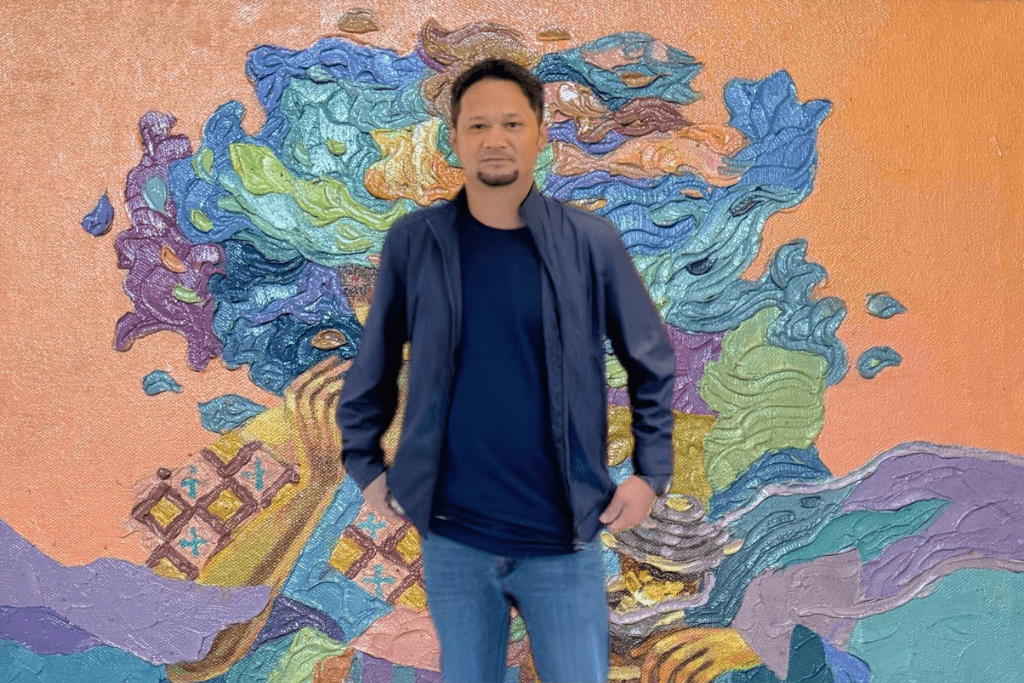
Romulo Olazo

Romulo Olazo was born in 1934 in Balayan, Batangas, Philippines. After his father passed away when he was four, his mother raised him. Later, in 1951, he moved to Manila to find work and pursue new opportunities. By 1959, he enrolled at the University of Santo Tomas in the Department of Fine Arts. At that time, the university served as a center for the modernist movement. There, he trained under Victorio Edades and Diosdado Lorenzo. In addition, he studied alongside emerging artists such as Ang Kiukok, Elizabeth Cheng, and Ong Bungian. Early Career and Advertising Work After finishing his studies, Olazo entered the advertising industry. However, he continued painting and printmaking at the same time. Because of his dedication, he joined exhibitions organized by the Art Association of the Philippines and other galleries. During the day, he worked as an illustrator for Oriental Komiks and Tagalog Klasiks. Later on, he became art director for the Philippine Advertising Counselors. Meanwhile, he spent his evenings creating paintings and prints, further developing his style. Personal Life and Artistic Development While working as an art director, he met Patricia Tria, whom he married in 1966. Over the years, he credited much of his success to her support. Together, they raised three children: Noelle, Jill, and Jonathan. In the 1970s, his focus shifted entirely to printmaking. As a result, he began receiving awards and recognition. In 1972, the Cultural Center of the Philippines named him one of the Thirteen Artists. At the same time, he built his own studio at home called “101 Workshop.” There, he welcomed fellow artists such as Roberto Chabet and Fernando Modesto. Because of this, the space became a hub for collaboration and creativity. International Recognition and Major Works In 1973, Olazo participated in the XII Biennial in São Paulo, Brazil. During this event, he exhibited his Diaphanous series. This collection featured transparent layers and soft color interactions. As a result, it gained strong recognition in the art world. Later, in 1979, he received an honorable mention at the 11th Biennial of Prints in Tokyo. His Permutation series introduced an x-ray-like visual effect. Moreover, it continued his exploration of lightness and monochromatic tones. Artistic Influence and Exhibitions Olazo’s abstract and non-objective works helped shape the second generation of modernist art in the Philippines. Because of this influence, galleries such as Luz Gallery and Finale Art File frequently showcased his work. In 1981, critics named him one of the Philippines’ “Five Outstanding Living Artists.” Consequently, he stood alongside Napoleon Abueva, Arturo Luz, Cesar Legaspi, and Ang Kiukok. By 1983, he joined the exhibition Four Masters: Four Worlds at Sunvar Plaza in Makati. The show included Ang Kiukok, Cesar Legaspi, and Malang. Due to its success, it continued as an annual exhibition for ten years. Later Years and Legacy Despite facing health challenges later in life, Olazo continued creating art. Even with a pacemaker and limited mobility, he remained active in his practice. In the 2000s, he produced some of his largest Diaphanous works using silkscreen and paint. In 2009, Ayala Museum and Paseo Gallery presented a retrospective of his work. This exhibition highlighted over 40 years of his artistic journey. By 2012, Bluewater Gallery in Mactan, Cebu, hosted his 40th solo exhibition titled Diaphanous by the Sea. This collection reflected ocean-inspired themes and memories of his childhood. In addition to his own success, he took pride in his son Jonathan, who followed his path in the arts. Jonathan later became curator of the ManilArt Fair and received the Thirteen Artists Award. On August 18, 2015, Romulo Olazo passed away at the age of 81. Nevertheless, he left behind a powerful legacy. His work continues to inspire future generations. Through his imagination and dedication, he helped redefine printmaking in the Philippines.  

Ramon Orlina
Artists

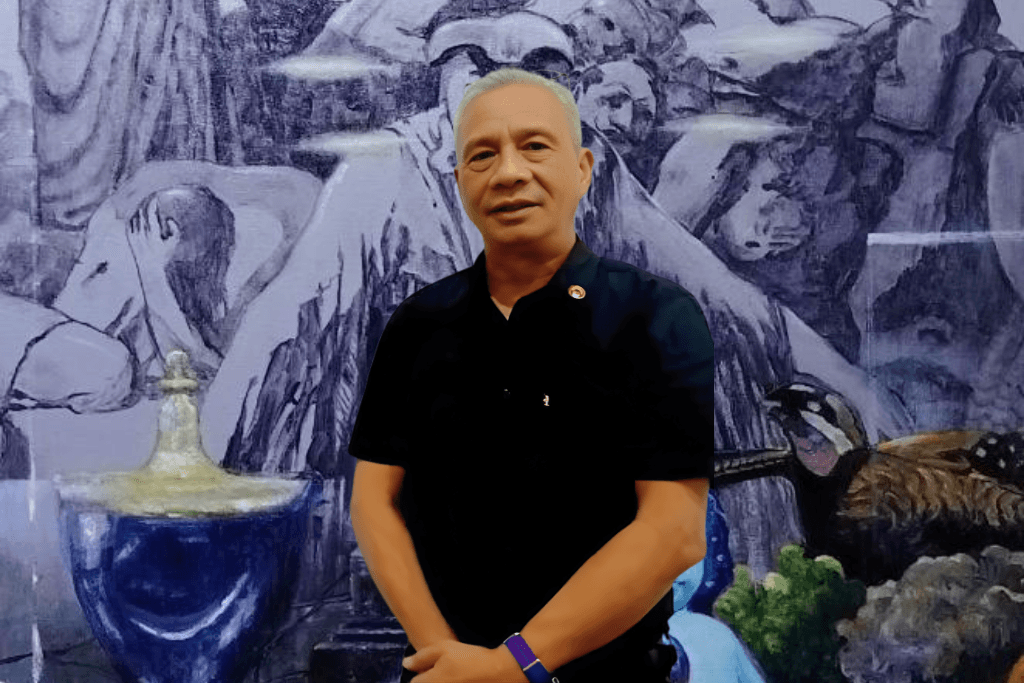
Ramon Orlina

Ramon Orlina is a licensed architect and renowned visual artist. He earned his Bachelor of Science in Architecture from the University of Santo Tomas College of Architecture and Fine Arts in 1965. Early in his career, he worked with C.D. Arguelles and Associates for four years. Later, he established Ramon Orlina and Associates, where he handled architectural projects and administration. In addition, he became a member of the College of Fellows of the Philippine Institute of Architects. Transition to Art In 1975, Orlina held his first solo exhibition featuring paintings on glass at the Hyatt Gallery in Hyatt Hotel. A year later, he pioneered the use of glass as a medium for sculpture. Because of this innovation, he shifted his focus entirely to the arts. Since then, he has exhibited extensively across the Philippines and internationally. Awards & Recognition Over the years, Orlina has received numerous prestigious awards. In 1993, he earned the ASEAN Awards for Visual Arts. The following year, he received the Third ASEAN Achievement Awards for Visual Arts. In 2006, he was honored with The Outstanding Filipino (TOFIL) Award for Visual Arts. In 2012, the Philippine Institute of Architects awarded him the Gold Medal of Merit for his contributions to architecture and visual arts. Furthermore, the Rotary Club and Quezon City Government recognized him with the Rotary Golden Wheel Award in Arts and Culture in 2014. That same year, he received the People of the Year Award from Stargate PeopleAsia. More recently, in 2017, he was honored with the Outstanding Manilan Award and the Manuel L. Quezon Gawad Parangal Most Outstanding Citizen. International Achievements Orlina has also gained recognition in international competitions. For instance, he won the “Mr. F” Prize at the 1999 Toyamura International Sculpture Biennale. In 2000, he secured First Prize in the Sculpture Category at the II Bienale Internacional del Baloncesto en las Bellas Artes in Madrid, Spain. In addition, he received several honorable mentions in competitions held in Japan. Because of his mastery in glass sculpture, critics often place him alongside renowned artists such as Dale Chihuly of the United States and Bertil Vallien of Sweden. Major Works Among his notable works is QuattroMondial, a 10.32-meter-high sculpture made of cast bronze and glass. He created this piece for the University of Santo Tomas, and it was unveiled in January 2011. This large-scale work highlights his skill in combining architecture and sculpture. Museo Orlina Today, Orlina’s name is synonymous with glass sculpture in the Philippines. In December 2013, he opened Museo Orlina in Tagaytay City, Cavite. The museum features his works along with a sculpture garden and amphitheater. Over time, the museum expanded to nearly double its original size. It now includes larger gallery spaces and a dedicated museum café, further enhancing the visitor experience.    

Eman Santos
Artists

Eman Santos

Eman Santos is a multi-awarded visual artist and sculptor. He is widely recognized as a contemporary master in visual arts. Over the years, he has earned top honors in prestigious competitions both locally and internationally. As a result, he has built a strong reputation in the global art scene. Moreover, his long list of awards over the past two decades reflects his creativity, dedication, and artistic excellence. Critical Recognition Throughout his career, art critics and journalists have written numerous articles about Santos. In fact, many of these reviews highlight the depth, technique, and visual impact of his works. Furthermore, critics consistently praise the emotional strength and craftsmanship present in his art. Because of this, his work continues to gain admiration from both collectors and audiences. International Exhibitions Santos has showcased his works in various countries through solo and group exhibitions. For instance, he has exhibited at Chelsea Gallery and Wimbledon Art Gallery in England. In addition, his works appeared at the Museum of Young Art in Vienna, Austria, and Fachklinik in Essen, Germany. Moreover, he has exhibited in the Ukraina Museum in Berlin, Luxembourg, and Galleria Wikiarte in Bologna, Italy. More recently, he held a solo exhibition at the Carrousel du Louvre in Paris, France. As a result, his international presence continues to grow and strengthen. Artistic Affiliations He is also a member of The Saturday Group, an elite organization founded in July 1968. This group includes some of the most respected artists in the Philippines. Notably, eight National Artists for Visual Arts came from this group. These include HR Ocampo, Cesar Legaspi, Carlos “Botong” Francisco, Jose Joya, Vicente Manansala, Arturo Luz, BenCab, and Ang Kiukok. Therefore, his association with this group highlights his standing in the art community. Artistic Style Santos is known for his prosperity-themed paintings and sculptures. Throughout his career, he has maintained a consistent artistic vision. At the same time, he continues to explore different techniques and compositions. Consequently, his works display strong energy and visual impact. Because of this, his art remains both dynamic and engaging. Latest Awards 2023INTERNATIONAL PRIZE PEGASUS FOR THE ARTS & TOP ARTIST – Venice, ItalyWORLD BEST ARTIST PRIZE AWARD – Palermo, ItalyINTERNATIONAL PRIZE DONATELLO – Florence, ItalyINTERNATIONAL PRIZE LEONARDO DA VINCI – Milan, ItalyCARROUSEL DU LOUVRE – Solo Exhibition, Paris, FranceXIV FLORENCE BIENNALE – Florence, Italy 2022Edgar Degas Award – Mumbai, IndiaJurors Choice Excellence Award – Lyon, France 2021AMHSAI Distinguished Alumni Awardees 20182nd Place – NPDC National Art CompetitionHonorable Mention – Robinson National Art Competition3rd Prize – GSIS National Art CompetitionTop 4 Finalist – GSIS National Art Competition 2016Finalist – GSIS National Art CompetitionNatatanging Pintor – Bahay Kubo ng Sining FoundationFinalist – AAP Painting Contest 2015Honorable Mention – AAP Annual Art Competition (Drawing)Finalist – AAP Annual Art Competition (Painting) 20142nd Prize – GSIS National Art CompetitionHonorable Mention – GSIS National Art Competition 2013Honorable Mention – Transwing Kunst Art Contest 2012Grand Prize – AAP Annual Art CompetitionHonorable Mention – SculptureHonorable Mention – Drawing 2011Grand Prize – Together Arts International Contest, India 20103rd Place – Fine Art America Contest, UK1st Place – Fine Art America Contest, USAFinalist – AAP-ECCA CompetitionGawad Recom Award1st Place – Kunst Gallery 20043rd Prize – National Bookstore Painting Contest

Where The Roads Remember
Exhibitions

Art Lozano

In the evocative world of Art Lozano’s paintings, roads do more than connect places—they carry memory, experience, and time. Landscapes and familiar forms witness life’s journeys, revealing the quiet dialogue between movement and stillness. Through layered colors and expressive gestures, Lozano shows how every path preserves choices made, moments lived, and emotions felt. By pausing motion within nature, he invites viewers to reflect on their own journeys. Consequently, we realize that meaning often lies not in the destination but in the memories shaped along the way. Lozano hails from both Ilocandia and the Cordillera. Moreover, he actively advocates for environmental preservation. He uses his art to inspire audiences to protect the Earth’s pristine beauty. Over more than two decades, he has gained recognition from prestigious award-giving bodies and has frequently participated in national and international exhibitions. Additionally, he has established a creative hub to mentor fellow artists and other creatives. Awards: 2017 – GSIS Art Award – Finalist 2016 – GSIS Art Award – Finalist 2015 – GSIS Art Award – Finalist 2014 – GSIS Art Award – Finalist 2013 – Philippine Art Award (Luzon winners) – Top 40 2013 – GSIS Art Award – 3rd Place 2012 – First Sining PSE Art Competition – Top 5 2012 – Metrobank Art & Design Excellence (MADE) – Finalist

Shopping Cart
Scroll to Top
Historia Arts

Historia Arts

Typically replies within an hour

I will be back soon

Historia Arts
👋“Hi! Welcome to Historia Arts. How can I assist you today?”✨
Messenger